Welcome to Sikkim......its waiting to be discovered by you. Sikkim is a land of superlatives, with its magnificent mountains, rich
cultures and pristine environment. A tiny jewel of a state, its total
population is only 540000 and it covers just over 7000 square
kilometers. Yet within Sikkim's Himalayan boundaries, there are many
worlds to discover, as you travel from Buddhist monastery to Hindu
mandir, or trek from a alpine meadow to cascading waterfall, visiting
cities and villages along the way. |
||
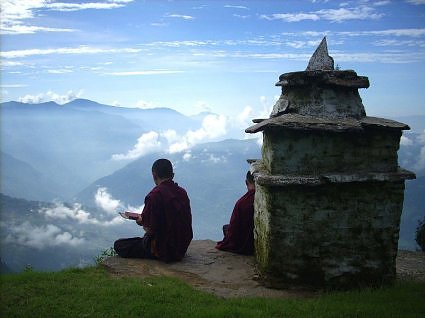 |
Cultural diversity of Sikkim's hallmarks, from Dezongu indigenous Lepcha reserve in north Sikkim, to traditional Bhutia villages in the west and Nepalese agricultural settlements in the south. Each of these culture groups celebrate their own rituals and festivals throughout the year, so that there is never a dull week in Sikkim. For those interest in nature as well as culture, the states biodiversity is unsurpassed. Ranging from subtropical to alpine Eco-zones, Sikkim's flora and fauna include a number of rare species such as red panda, the snow leopard and the Himalayan black bear, not to maintain a huge variety of brightly coloured rhododendrons and exotic orchids. Bounded to the north and northeast by the Tibetan Autonomous Region of China, to the west by Nepal, to the southeast by Bhutan and to the south by Darjeeling district of the state of West Bengal, Sikkim occupies an important strategic niche along one of the oldest Himalayan trade routers. Much of the states north and west is perpetually snow covered and dominated by the Kanchenjunga massif, India's highest and world's third highest mountain. Each of Sikkim's four districts holds its own treasures, and this website is structured in four parts to introduce you to every districts in turn: East, North, West and South |
|
