West SikkimThe West district of Sikkim is a rich cultural cauldron with exotic scenic views. Full of monasteries, streams, waterfalls and a rich kaleidoscope of flora and fauna it makes for a perfect holiday. |
||
Situated at an altitude of 6050 ft. / 1700
mtrs and a 35 km driveway from Pelling, Yuksom is a
beautiful village. It is also the base of the mystic
peaks of the mighty Khanchendzonga & serves as a
trailhead for those who want to trek up to
Khanchendzonga National Park, Dzongri or Goechala
Pass. Its importance lies in the fact that it was
the first capital of Sikkim from where the early
history of Sikkim began. One can still see the
Coronation Throne (stone ruins). It is a
heritage site. This is the place where the first
Chogyal (Righteous ruler) or the Dharma Raja Chogyal,
Chogyal Phuntshok Namgyal was coronated as the first
King of Sikkim in the year 1641 A.D. by the three
great saints, who had come from three different
directions. Hence the name Yuksom means the meeting
place of three incarnates. Situated at an altitude of about
2105 mtrs/ 6840 ft., Pelling was originally
known as Pemalingpa. The name Pemalingpa is
derived from Pemalingpa monastery. The place
is famous for its magnificient view of the
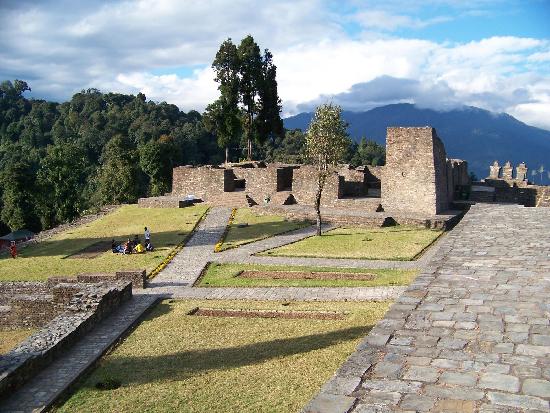
Khanchendzonga ranges. This monastery is nearby to Pelling situated at an altitude of about 6840 ft. / 2072 m. It is the most important monastery of the Nyingmapa order & was built in the late seventeenth century by Lama Lhatsum Chenpo one of the revered Lamas to have performed the consecration ceremony of the first Chogyal (religious monarch) of Sikkim & has been considered as one of the premier monasteries in the State, having been entrusted with the task to perform all religious functions of the erstwhile monarch. The monastery houses numerous religious idols & other objects of worship, most of which are priceless because of their antiquity. Inside the monastery on the top floor there is a wooden structure depicting the Maha Guru’s heavenly palace (Sang-tok-palri), which is considered a masterpiece created by Late Dungzin Rimpoche. The main festival of the monastery is held every year during the month of February. Rabdentse was the second capital of Sikkim & was established in the late seventeenth century by the second Chogyal of Sikkim. It was abandoned towards the end of the eighteenth century because of the threat posed by Nepal & the capital was shifted to Tumlong. The Rabdentse Palace lies in ruins now & one has to trek about 2 kms / one hour from the main road near Pemayangtse monastery through a thick forest to reach it. The ruins are now being preserved by the Archaeological Survey of India & have been declared as a monument.
SANGACHOELING MONASTERY
TASHIDING MONASTERY KHECHEOPALRI LAKE SINGSHORE SUSPENSION BRIDGE RINCHENPONG
BARSEY / HILLEY |
          |
|
